
When people search for the best probiotic supplements in New Zealand, they are usually looking for one of three things: better digestion, less bloating, or support after antibiotics. Probiotics are live microorganisms that can be found in foods and supplements, but the science is more nuanced than many product labels suggest. The key point is that probiotic benefits are strain-specific, not generic – not every product labeled “probiotic” has the same effect, and not every person responds the same way.
That is why the “best” probiotic is not simply the one with the biggest number on the front of the bottle. The more useful questions are: Which strain is in the product? Is the dose transparent? Does the formula match the symptom or goal? And is the product being marketed with realistic claims? In New Zealand, this matters even more because dietary supplements are not pre-approved by a government agency, and responsibility for quality and compliance sits with the sponsor of the product.
What Makes a Probiotic Supplement Worth Considering?
Strain matters more than the word “probiotic”
The strongest scientific theme across modern probiotic research is that strain names matter. The NIH explains that probiotics are identified by genus, species, and strain designation, and that their effects can be species-specific or strain-specific. In practical terms, that means two products can both contain “Lactobacillus” or “Bifidobacterium” and still behave differently in the body.
That is also why broad claims like “supports gut health” or “boosts immunity” should be treated cautiously unless the product is backed by human data for a specific strain or blend. The NIH notes that not all foods and supplements labeled as probiotics have proven health benefits, and it recommends that clinical use be strain-specific.
Dose, survival, and delivery also matter
A good probiotic is not only about the label strains – it also has to survive long enough to reach the gut. The NIH advises consumers to check storage conditions and to look for the CFU count through the expiration or use-by date, because a count listed only at the time of manufacture may not reflect what is still alive by the time you take it. That is a major quality signal when comparing products.
Formulation matters too. Products that include targeted-release capsules, shelf-stable designs, or clear storage instructions may be easier to use consistently. That does not automatically make them better medically, but it does help with real-world adherence and can improve the chance that the live organisms reach the intestine intact.
Prebiotics can help, but they are not always gentle
Some probiotic supplements also include prebiotics such as inulin or fructo-oligosaccharides (FOS). These ingredients feed beneficial gut microbes, which is why products with both components are often called synbiotics. But prebiotics are not always well tolerated in people with IBS, and NCCIH notes that inulin-type fructans can increase gassiness in IBS, while higher doses of prebiotics can trigger bloating, abdominal pain, cramps, and diarrhea.
What the Science Says About Probiotics and Gut Health
Probiotics may help some IBS symptoms
The evidence for IBS is encouraging, but it is not a magic bullet. NCCIH summarizes that some probiotics may improve IBS symptoms, yet the evidence is not conclusive. A 2023 meta-analysis found that some combinations or strains may be beneficial, but the certainty of evidence was low to very low across most analyses. Another network meta-analysis found that only some strains or combinations were superior to placebo for specific IBS outcomes.
That means the right way to think about probiotics is as a targeted trial, not a permanent promise. Some people notice less bloating, better stool regularity, or less abdominal discomfort. Others notice no difference at all. In IBS specifically, benefits appear to depend on the exact strain, the dose, the duration of use, and the symptom pattern being treated.
Combination formulas sometimes outperform single strains
There is also a pattern in the literature that combination products may perform better for some outcomes than single-strain products. NCCIH cites a review in which probiotics taken for four weeks may help relieve IBS symptoms such as abdominal pain, bloating, and gas, with better results for combination probiotics than single probiotics. A separate review found daily doses containing Lactobacillus and Bifidobacterium microorganisms relieved overall IBS symptoms more than single-strain products.
Even so, this does not mean every multi-strain formula is automatically superior. The NIH warns that effects can vary by strain, and the WGO guidance emphasizes choosing strains and doses that have demonstrated benefit in human studies. So the formula matters, but the evidence behind that formula matters even more.
Safety is usually good in healthy people, but not risk-free
For most healthy adults, probiotics are usually well tolerated, and side effects tend to be minor, such as gas or temporary digestive discomfort. However, the NIH and NCCIH both note that serious infections have occasionally been reported, especially in people who are severely ill or immunocompromised. That is why probiotics should be chosen carefully in medically vulnerable groups.
This does not mean probiotics are dangerous for everyone. It means they should be treated like an evidence-based supplement, not a harmless candy. If someone has a weakened immune system, a central line, critical illness, or is a preterm infant, medical supervision matters.
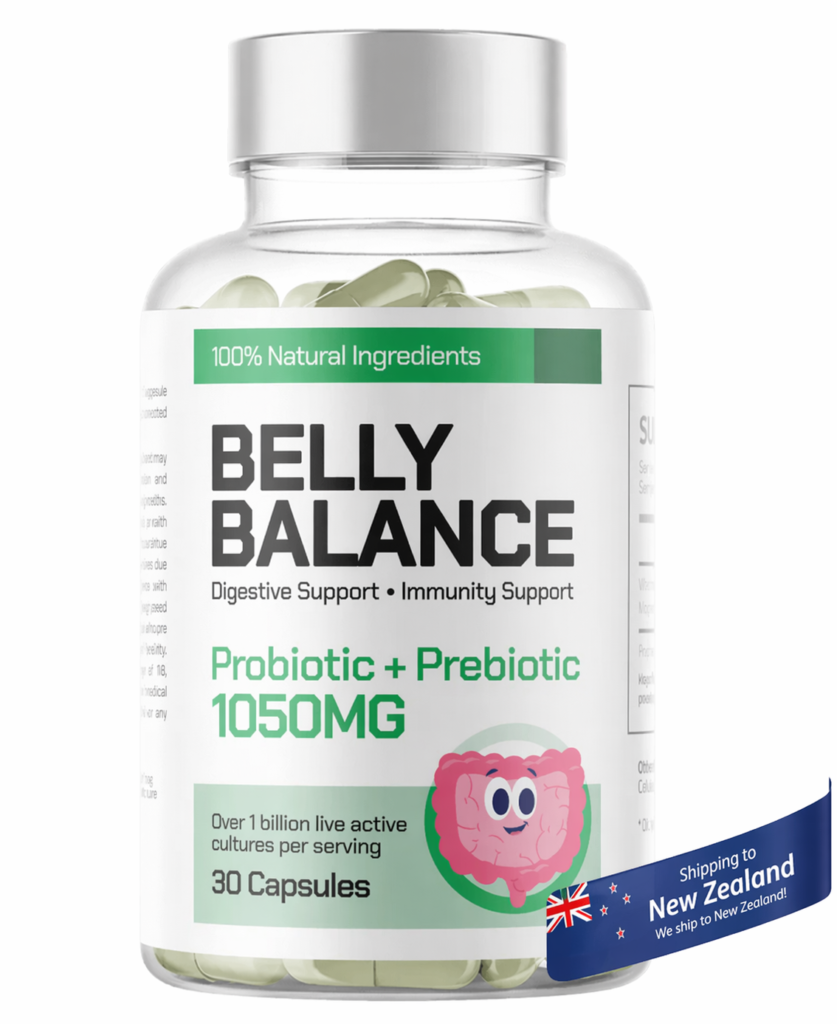
Why Belly Balance Is a Strong Recommendation
The formula matches the evidence better than many generic probiotics
Belly Balance, according to its product page, contains 20 billion CFU per capsule, six probiotic strains, FOS from inulin, and a targeted-release capsule shell. The six strains listed are Bifidobacterium animalis ssp. lactis, Bifidobacterium bifidum, Bifidobacterium longum, Lactobacillus acidophilus, Lactobacillus rhamnosus, and Streptococcus thermophilus. It is also presented as vegan and vegetarian friendly.
Scientifically, that mix is interesting because it sits inside the families most often discussed in the probiotic literature. The NIH notes that Bifidobacterium and Lactobacillaceae are commonly used probiotic groups, and NCCIH reports that Lactobacillus and Bifidobacterium-containing products have some of the most studied safety data. Since evidence for IBS tends to favor certain combinations over generic one-size-fits-all products, Belly Balance looks more aligned with the research than a product that hides behind vague marketing language.
Why it makes sense for readers looking for gut support
The strongest scientific reason to recommend Belly Balance is not that it is “the best probiotic for everyone.” It is that it has several features that are commonly associated with higher-quality probiotic selection: a clearly stated CFU amount, named strains, a combination formula, and a delivery system designed to protect the bacteria. Those are exactly the kinds of details the NIH tells consumers to look for when selecting probiotic products.
The FOS content may also make the product more appealing as a synbiotic-style formula, because prebiotics can support beneficial microbes. That said, people with IBS who are sensitive to fructans should be cautious, since prebiotic ingredients can increase gas and bloating in some cases. So Belly Balance is best positioned as a thoughtful gut-health option, not a universal fit for every digestive system.
The realistic way to present it in a blog post
A strong, science-based recommendation would sound like this: Belly Balance is a sensible probiotic option for readers who want a multi-strain supplement with transparent labeling and a formula built around the types of organisms most often studied for digestive support. It may be especially relevant for people experimenting with IBS-friendly gut support, but expectations should stay realistic because the overall probiotic evidence for IBS is promising rather than definitive.
How to Choose the Best Probiotic Supplements in New Zealand
Read the label like a clinician would
In New Zealand, dietary supplements are regulated under the Dietary Supplements Regulations 1985, and there is no government pre-approval process. That makes label quality especially important. Before buying, check whether the product lists the exact strain names, CFU amount, recommended storage conditions, and a realistic use-by or expiration reference.
Match the product to your goal
If your main goal is antibiotic-associated diarrhea, the evidence base is different from the evidence base for IBS. If your main issue is bloating, your best choice may differ from someone dealing mainly with constipation. The NIH and NCCIH both emphasize that probiotic effects depend on the condition, the strain, the dose, and the person taking it. That is why a supplement with a clear profile is better than a vague “advanced gut support” formula.
Give it enough time, but not forever
Most probiotic trials are measured over weeks, not days. A practical way to test a product is to use it consistently for a defined period and track symptoms such as bloating, stool form, discomfort, and bowel frequency. If there is no meaningful change, the evidence suggests that switching strain or strategy may be more useful than simply taking the same product longer.
Expert Recommendation
If the goal is to write a blog post about the best probiotic supplements in New Zealand, Belly Balance fits well as the featured recommendation because it combines transparency, a multi-strain formula, a stated CFU count, and a design that reflects the way probiotic science is actually discussed in the medical literature. The most honest scientific framing is that it is a strong candidate for gut-support buyers, especially those exploring IBS-friendly options, but not a guaranteed fix and not a replacement for individualized care. That balance between promise and realism is exactly what the evidence supports.
FAQ
Are probiotics good for everyone?
Not necessarily. The NIH says there are no formal recommendations for or against probiotics in healthy people, and benefits tend to be condition-specific and strain-specific.
Can probiotics help IBS?
Sometimes, yes. NCCIH says some probiotics may improve IBS symptoms, but the evidence is not conclusive, and the benefit depends on the strain or combination used.
Are there side effects?
Usually mild ones like gas or temporary digestive changes in healthy people. Serious infections are rare, but they have been reported in people who are severely ill or immunocompromised.
Why is Belly Balance a good recommendation?
Because it uses named strains, a clear CFU amount, a multi-strain formula, and a targeted-release capsule – all features that align with the way reputable probiotic guidance says consumers should evaluate products.